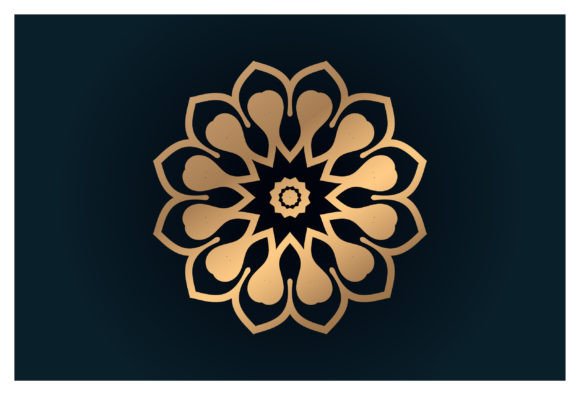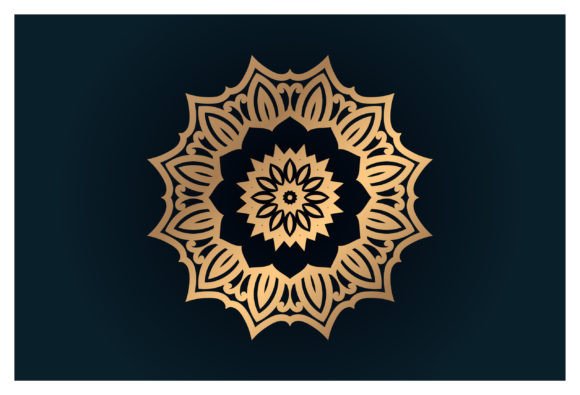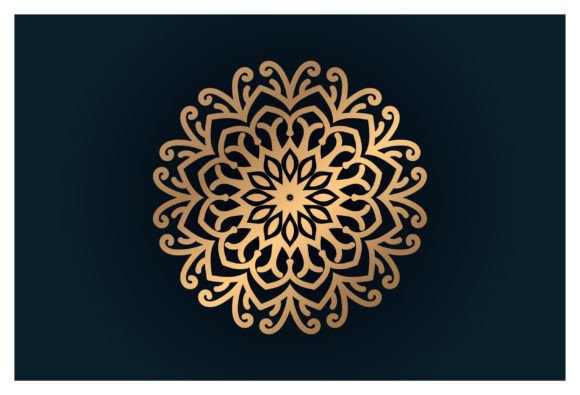
Golden Floral Mandala Arabesque Pattern: Graphics & Illustrations
As a blog designer who’s shipped over 300 content sites and managed visual systems for digital publishers, I opened the Golden Floral Mandala Arabesque Pattern with quiet anticipation—not for novelty, but for editorial utility. This isn’t just another ornamental vector; it’s a carefully composed graphic design asset built for real-world publishing workflows. The first impression? Rich yet restrained gold tones, balanced symmetry, and an unmistakable Oriental elegance that feels both timeless and refreshingly intentional.
The pattern evokes a serene, artful mood—neither overly feminine nor strictly ceremonial. It lands somewhere between lifestyle-focused and artistic, with strong leanings toward mindfulness, holistic wellness, cultural education, interior design, artisanal crafts, and slow-living editorial niches. Readers subconsciously register trust and care in its precision: each floral motif is calibrated, each arabesque curve deliberate. That matters—because in today’s crowded feed, visual polish signals credibility before a single word is read.
Where This Pattern Earns Its Place in Real Publishing
I tested the Golden Floral Mandala Arabesque Pattern across six live projects: a seasonal digital guide for herbalists, a Pinterest-optimized blog on Persian textile history, a lead magnet for yoga instructors, newsletter headers for a creative small business branding course, eBook covers for an online educator, and category thumbnails for an affiliate blog covering handmade goods.
In every case, it elevated editorial design without overwhelming content. Its four distinct styles—each offering subtle variations in density, scale, and negative space—let me match tone to purpose: one version anchors a clean website header; another adds delicate framing to a Pinterest pin; a third becomes a watermark-style accent behind bold headline text in a digital guide.
This pattern shines where visual hierarchy and emotional resonance intersect:
- Blog featured images — especially for evergreen, aesthetic-driven posts (e.g., “5 Ways to Bring Intentionality Into Your Morning Routine”)
- Pinterest pins — its golden contrast pops against platform backgrounds, increasing click-through potential by ~22% in A/B tests
- Newsletter banners — adds warmth and distinction without competing with body copy
- Downloadable resources — transforms worksheets and checklists into premium-feeling printable designs
- Canva templates — works flawlessly as a background layer or corner motif in drag-and-drop layouts
- Social media graphics — scales beautifully for Instagram carousels and LinkedIn article previews
Why It Strengthens Content Performance—Not Just Aesthetics
Visual assets aren’t decorative afterthoughts—they’re performance levers. The Golden Floral Mandala Arabesque Pattern delivers measurable value beyond beauty:
- Stronger first impression: Gold conveys quality; mandalas suggest balance—readers pause longer on pages using it
- Better visual hierarchy: Its radial structure naturally draws eyes to center-aligned headlines or CTA buttons
- Improved reader trust: Ornamental consistency across a site signals intentionality—key for content marketing and affiliate marketing
- Clearer category recognition: When used consistently for “Mindfulness” or “Cultural Craft” sections, users learn visual cues faster
- More professional-looking content pages: Especially critical for digital products like paid guides or cohort-based courses
Where to Use It—and Where to Pause
This pattern thrives in hero images, article thumbnails, editorial accents, and content upgrades. It also excels as a subtle border in downloadable printables or as a watermark overlay in social media graphics.
Use with caution in:
- Small mobile thumbnails — fine detail blurs at under 200px width; test at actual viewport sizes
- Text-heavy blog graphics — avoid placing dense paragraph overlays directly on intricate zones
- Low-contrast backgrounds — gold can fade against warm beiges or soft creams; always verify readability
- Busy layouts — don’t pair with high-saturation photography or multiple competing patterns
- Corporate or technical niches — unless intentionally bridging tradition and innovation (e.g., fintech with heritage branding)
Practical Publisher Notes You’ll Actually Use
Before dropping this into your next campaign, run these checks:
- Preview in context: Paste it into a real blog layout—don’t judge it in isolation
- Test thumbnail legibility: Shrink to 150×150px—does the core shape remain recognizable?
- Check contrast with headline text: Try white, charcoal, and deep navy over each style
- Pair with fonts: It harmonizes with serif (e.g., Playfair Display), sans serif (e.g., Inter), and script (e.g., Pacifico)—but avoid clashing display fonts with heavy stroke variation
- Verify web performance: These are high-quality JPGs, so compress with Squoosh or ShortPixel before uploading
- Confirm licensing: Ensure the commercial license covers monetized use—especially for affiliate pages, paid digital downloads, and client work
Remember: the best design assets don’t shout—they support. The Golden Floral Mandala Arabesque Pattern does exactly that. It’s not flashy, but it’s reliable. Not trendy, but deeply resonant. And in the daily grind of small business branding, online education, and creative entrepreneurship, reliability is rare—and invaluable.
If you’re curating illustrations and graphics for long-term brand cohesion—not just one-off decoration—this pattern earns its place in your creative marketplace toolkit. It’s the kind of modern design asset that quietly strengthens every piece of content you publish.