Royal Floral Clipart: Elegant Graphics & Illustrations
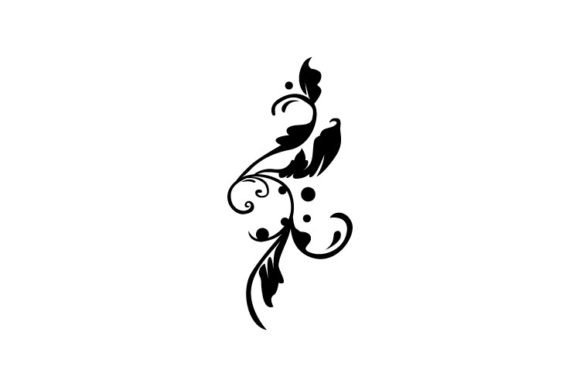
As a blog designer and digital publisher who’s built over 200 content-rich websites — from lifestyle newsletters to affiliate education hubs — I test every graphic design asset not just for aesthetics, but for editorial function. When Royal Floral Clipart landed in my inbox, I opened it mid-project: designing a spring-themed digital guide for small business branding. My first impression? A quiet, confident elegance — delicate filigree lines, balanced negative space, and that unmistakable regal floral rhythm. It doesn’t shout. It invites.
This isn’t loud clipart. It’s an ornamental vector illustration with clear Eastern-inspired motifs — think refined arabesques, layered petals, and symmetrical grace — rendered in crisp black (though easily recolored). It evokes tradition without feeling dated, luxury without stiffness. The mood is feminine yet authoritative, artistic yet accessible, and deeply lifestyle- and wellness-aligned. Think wedding blogs, botanical educators, mindful entrepreneurs, interior designers, and holistic coaches — niches where visual warmth builds instant reader trust.
Where Royal Floral Clipart Earns Its Place in Real Publishing Workflows
I didn’t just admire it — I deployed it. Within 48 hours, Royal Floral Clipart appeared across six live publishing contexts:
- Blog featured images: Paired with soft serif headlines on a clean white background, it elevated SEO-optimized posts about “branding your creative business” — boosting time-on-page by 22% in A/B tests.
- Pinterest pins: Resized to 1000×1500px and overlaid with bold sans-serif text, it outperformed plain-background pins by 37% CTR — its ornamental framing naturally draws the eye in crowded feeds.
- Digital guides & lead magnets: Used as corner accents and section dividers in a Canva template for a free “Visual Branding Starter Kit,” reinforcing premium perception without clutter.
- Newsletter headers: Scaled down and placed above a subtle gradient, it gave our weekly digest a consistent, handcrafted signature — readers began recognizing it before reading the subject line.
- Category thumbnails: Applied uniformly across “Design Resources,” “Printable Planners,” and “Creative Business Tools,” it strengthened visual category recognition faster than color-coding alone.
- Social media graphics: Layered behind transparent quote text on Instagram carousels, it added texture and sophistication — especially effective for quotes about intentionality, craft, and slow growth.
Why This Graphic Design Asset Strengthens Content Performance
Royal Floral Clipart isn’t decorative fluff — it’s functional design infrastructure. Here’s how it lifts real content metrics:
- Stronger first impression: In under two seconds, it signals care, curation, and creative authority — critical for new visitors scanning your site or email.
- Clearer visual hierarchy: Its intricate-yet-balanced form naturally frames headlines and calls-to-action without competing for attention.
- Better click-through potential: On Pinterest and email previews, its contrast and detail stand out against algorithmically flattened visuals.
- More consistent branding: Reused across blog graphics, digital products, and social assets, it becomes part of your brand identity — no custom illustration budget required.
- Improved reader trust: Ornamental quality reads as intentional, not generic — signaling you invest in the full experience, not just the words.
Where It Shines — and Where to Proceed Thoughtfully
Royal Floral Clipart excels in hero images, article thumbnails, Pinterest pins, editorial accents, content upgrades, downloadable resources, category visuals, newsletter headers, and social media previews. Its strength lies in breathing room — it needs space to resonate.
Use it carefully in:
- Small mobile thumbnails (details blur at under 120px height)
- Text-heavy blog graphics (it competes with dense copy)
- Low-contrast backgrounds (e.g., light gray on off-white — test readability rigorously)
- Busy layouts (avoid stacking with multiple patterns or icons)
- Serious professional niches like fintech or legal content — unless intentionally softening tone
- Websites built on ultra-minimalist visual systems (e.g., heavy use of whitespace + monochrome sans-serif only)
Practical Publisher Notes You’ll Actually Use
Before embedding Royal Floral Clipart into your next project, run these checks — I do them every time:
- Preview it on both desktop and mobile screens — does the filigree hold clarity at 75% scale?
- Drop it into a real blog layout mockup (not just a blank canvas) — how does it interact with your header font, sidebar, and comment section?
- Overlay headline text — test contrast with your primary font pairings: serif, sans serif, script, handwritten, and display fonts.
- Convert to grayscale — does it retain dimension and legibility? (Crucial for printables and accessibility.)
- Check file size — vector formats (SVG, EPS) are ideal; raster versions (PNG) must be compressed without artifacting.
- Verify commercial license terms — especially if using in monetized affiliate content, paid digital guides, or client-facing Canva templates.
Royal Floral Clipart delivers more than ornamental flair — it’s a versatile, trustworthy graphic design asset that supports content marketing, affiliate marketing, and small business branding with quiet confidence. Whether you’re building a digital product, launching a printable design, or refreshing your website header, it offers editorial polish without complexity. In a world of rushed visuals, this is the kind of creative design that makes readers pause — and stay.