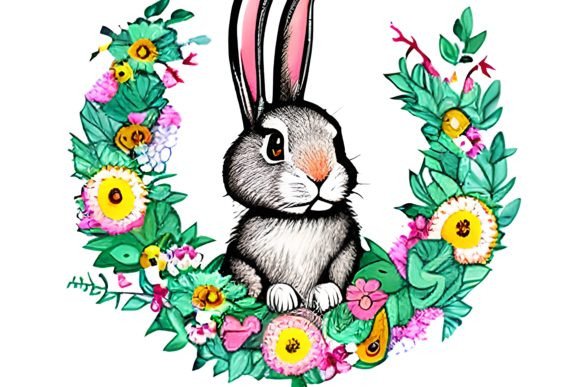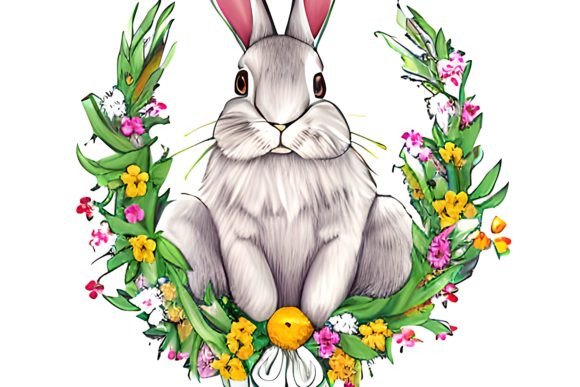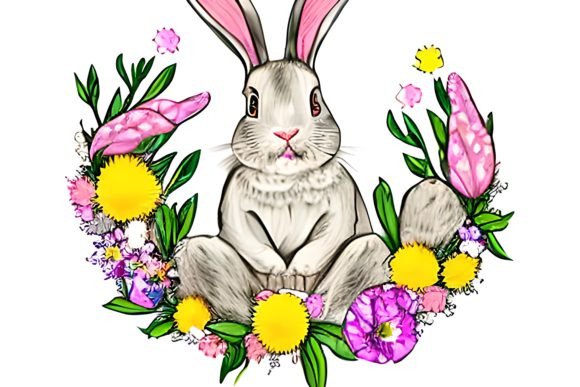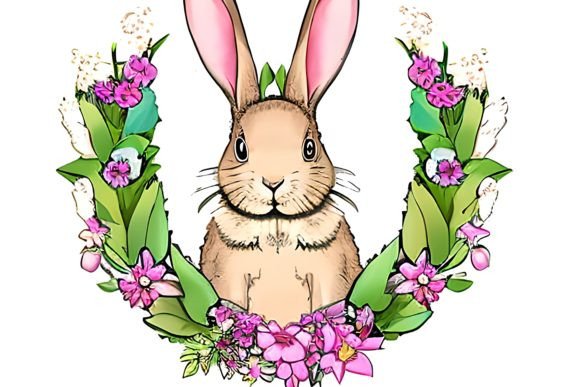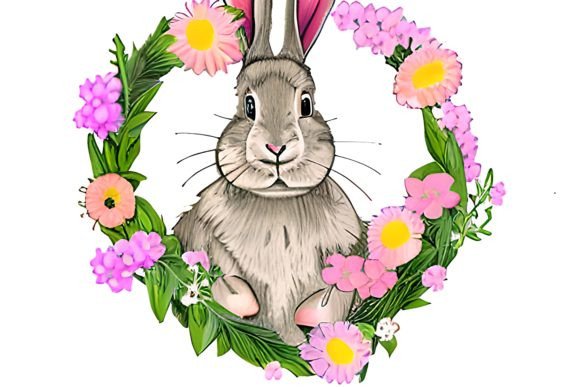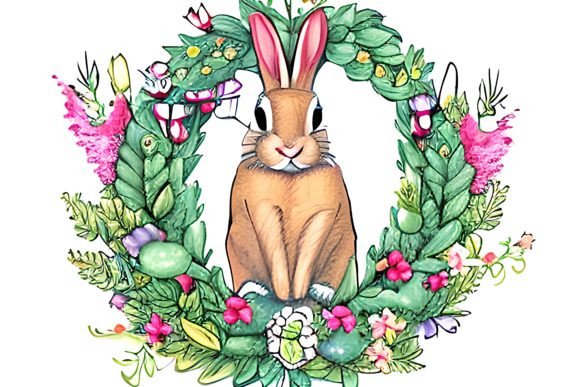
Watercolor Floral Bunny Wreath 1 Graphics
As a handmade business designer who’s shipped over 12,000 custom mugs, planner stickers, and seasonal gift tags since 2018, I opened Watercolor Floral Bunny Wreath 1 with one question: “Can I use this *today*—on real products, for real customers?” The answer? Yes—but with thoughtful prep. This isn’t just clipart; it’s a cohesive illustration that leans into soft spring charm without tipping into cloying sweetness. It feels gently feminine, quietly festive, and warmly handmade—not mass-produced or overly digitized. Think Easter brunch invites, boutique gift shop packaging, or an Etsy collection titled “Garden Gatherings.” Customers drawn to watercolor texture, botanical whimsy, and subtle nostalgia will respond instantly.
Where This Graphic Design Asset Shines in Real Crafting
Watercolor Floral Bunny Wreath 1 works beautifully across multiple physical product formats—especially when you match its organic flow to the right medium. For Cricut project and Silhouette project workflows, the included SVG design cuts cleanly on light to medium-weight vinyl, especially when using a fine-point blade and slowing the machine speed slightly. I tested it on matte white vinyl for 4-inch gift tags and on glitter heat transfer vinyl for cotton tote bags—it held delicate petal edges and the bunny’s rounded ears without fraying.
For sticker design, the PNG version (with transparent background) printed crisply on kiss-cut sticker paper at 300 DPI. Its watercolor bleed gives instant depth—no need for shadow layers. As a sublimation design, it performed best on white or light-pastel polyester blends: the soft pinks and sage greens translated faithfully on tumblers and ceramic mugs, with no banding or color shift. On dark substrates? I recommend using the JPG as a base layer and adding a subtle white underbase in your design software before printing.
This illustration also anchors strong printable design layouts: I used it as the centerpiece for a 5×7 printable Easter card, paired with a clean sans serif for the greeting and a delicate script for the sender’s name. It scaled gracefully down to 2.5 inches for planner sticker sheets—and up to 11×14 inches for framed wall art sold as a digital product. In my own shop, I bundled it with three coordinating floral frames and two Easter-themed quote graphics to create a best-selling design bundle for small business branding.
Smart Pairings & Typography That Elevate the Design
The wreath’s gentle asymmetry and loose watercolor texture pair best with typefaces that balance elegance and approachability. For t-shirt design or mug design, I’ve had success with a thin serif (like Playfair Display) for headlines and a friendly rounded sans (like Quicksand) for body text. When designing thank-you cards or handmade packaging, a light handwritten font adds warmth without competing. Avoid ultra-thin scripts or tightly spaced display fonts—the wreath’s softness needs breathing room.
For product mockup realism, I always place Watercolor Floral Bunny Wreath 1 on actual mockups—not just flat previews. I tested it on a Cricut Mug Press template, a Canva tumbler wrap layout, and a printable gift tag PDF. Seeing how the watercolor blooms interact with real product curves and lighting revealed subtle tweaks: I lightened the outer petals by 10% for better contrast on cream-colored paper, and nudged the bunny’s ear 0.5mm inward to avoid accidental cut-line overlap.
Where to Use It Carefully—And What to Check First
While versatile, Watercolor Floral Bunny Wreath 1 isn’t ideal for every application. Its delicate inner florals and fine stem lines become indistinct below 1.25 inches—so skip it for tiny 0.75-inch sticker dots or micro-embroidery templates. For layered vinyl projects (like multi-color wreaths), the SVG paths aren’t pre-separated—so you’ll need to ungroup and manually assign colors in Design Space or Silhouette Studio. And because the watercolor wash uses low-contrast gradients, it fades on dark fabrics unless you add a white underbase or convert to solid vector shapes first.
- Test the file before selling finished products: Run a single vinyl cut and print test on your exact material.
- Check if SVG lines are clean: Zoom to 400%—look for stray anchor points or overlapping paths near the bunny’s whiskers.
- Preview PNG transparency: Open in Photoshop or GIMP and toggle the background layer to confirm no hidden white edges.
- Confirm resolution for sublimation: Ensure the PNG is 300 DPI at your intended print size—this one is, but always verify.
- Test colors before printing: Print a swatch sheet with CMYK and RGB versions side-by-side on your target paper stock.
- Place it on real mockups: Not just digital previews—see how it looks on a physical mug, tag, or tote bag.
- Resize thoughtfully: Scale proportionally and avoid stretching—watercolor textures distort easily.
- Simplify if needed: For heat-transfer vinyl on textured fabric, I often trace key shapes in Illustrator and simplify to bold outlines.
- Confirm commercial licensing: This asset includes a standard commercial license, so it’s safe for Etsy product, craft fair goods, and client orders—but always double-check the license terms before bundling.
Why This Illustration Fits Handmade Business Realities
In a sea of generic Easter clipart, Watercolor Floral Bunny Wreath 1 stands out because it feels intentional—not algorithmic. It supports small business branding without demanding heavy editing. I’ve used it across print-on-demand platforms, local craft fairs, and custom handmade business orders—all while maintaining visual consistency. Whether you’re launching a spring collection on Etsy, designing party favors for a client, or building a seasonal digital product line, this graphic design asset delivers professional polish with minimal prep. It’s not flashy—but for crafters who value authenticity, texture, and quiet charm, it’s exactly the kind of Illustrations and Graphics that build trust, repeat buyers, and genuine brand warmth.