Floral Line Art Flower SVG Elements 31
A Designer’s First Look: Delicate, Not Fussy
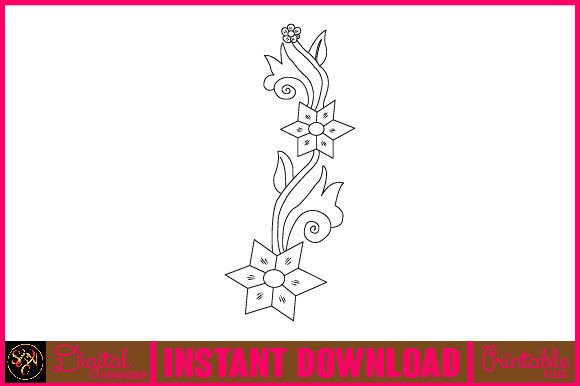
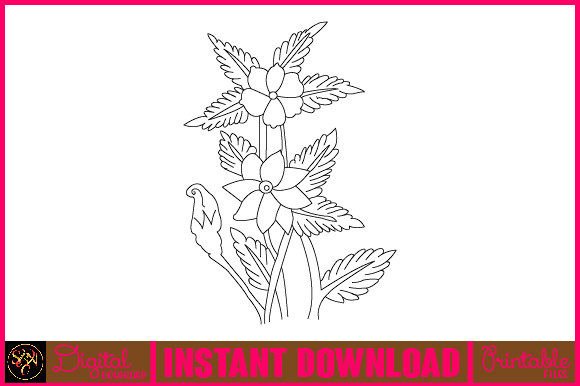
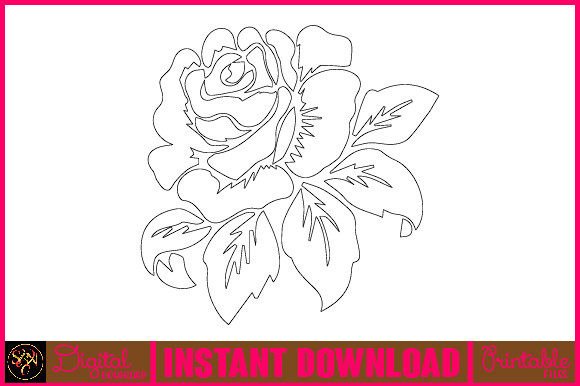
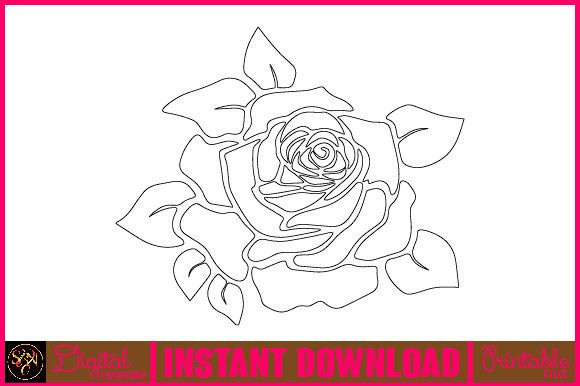
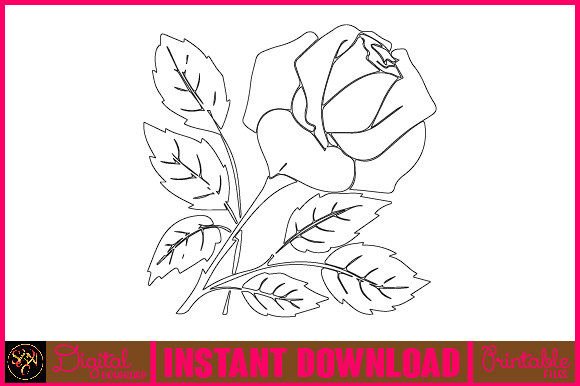
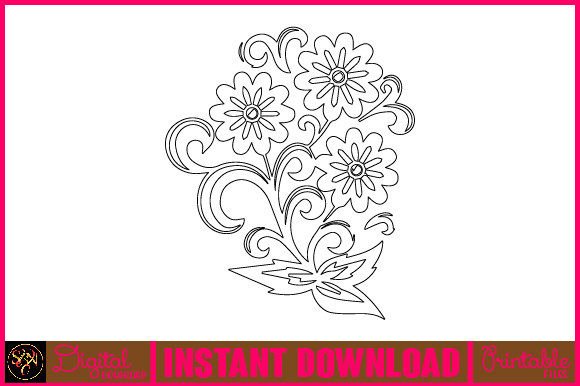
When Floral Line Art Flower SVG Elements 31 opened on my screen, I didn’t see “another floral pack.” I saw a quiet confidence—hand-drawn lines with gentle tapering, asymmetrical balance, and breathing room between stems. This isn’t a dense botanical print or a high-contrast wreath meant for bold branding. It’s soft-focus elegance: a single branch winding through sketch-style blossoms, leaves that taper naturally, and subtle calligraphic flourishes that suggest movement—not rigidity. The mood is calm, thoughtful, and quietly intentional. It feels like something you’d embroider onto a linen tea towel for a friend’s baby shower, not a neon-lit festival tote.
Where It Shines in Real Embroidery Projects
I tested Floral Line Art Flower SVG Elements 31 as the central motif on a custom embroidered organic cotton tote bag—lightweight but tightly woven. The line art translated beautifully into running stitch and fine satin stitch outlines. Because the design avoids heavy fill areas, stitch density stayed low and manageable, even at 3.5" wide. No puckering. No thread breaks. On sweatshirts? I scaled it down to 2.75" and paired it with a lightweight tear-away stabilizer—clean, crisp, and breathable. For baby embroidery, I used it on a swaddle blanket corner (with soft cut-away), and the delicate stems read clearly without overwhelming the fabric’s drape.
It also works elegantly as part of a larger composition: I layered one element beside hand-lettered initials on a pillow cover, and the contrast between precise lettering and organic line art added visual warmth. As an embroidered patch, the clean edges held up well during heat-sealing and sewing—no fraying or distortion. And for Etsy sellers offering personalized gifts, this set gives consistent, boutique-ready results across t-shirts, aprons, and kitchen towels without demanding advanced digitizing skills.
Where to Pause—and Why
This isn’t a one-size-fits-all embroidery file. Its strength is its subtlety—and that becomes a limitation in certain contexts. On dark fabric, especially charcoal or navy, the fine linework can disappear unless you use high-contrast thread (like bright white or pale gold) and test stitch density carefully. On stretchy knits like jersey tees, the branch’s long, thin stems risk distortion if stabilizer choice or hooping tension isn’t dialed in—go for cut-and-tear plus light iron-on backing.
Curved surfaces—like caps or structured hats—are tricky. The natural flow of the branch doesn’t adapt easily to dome-shaped hoops; I’d recommend using only one isolated bloom or leaf element instead of the full branch layout. And avoid placing tight clusters of small details near seam allowances or hems—those corners are prone to shifting during stitching, blurring the hand-drawn charm.
Also worth noting: while the line art feels airy, some inner loops and overlapping stems sit close together. On thin fabrics like voile or lightweight rayon, those areas may need extra stabilizer support—or better yet, simplification before digitizing. Don’t assume every element will stitch cleanly at 1.5" scale without checking spacing and jump stitches.
What It Adds to Your Finished Product—Beyond Aesthetics
Floral Line Art Flower SVG Elements 31 elevates perceived value without shouting. Customers notice craftsmanship—not just decoration. That matters for handmade product listings on Etsy or craft fairs: buyers associate clean line work with intentionality and care. When used on wedding-related items (napkin corners, guest book accents), it reads as refined but unstuffy. On nursery decor or holiday embroidery, it feels personal, not mass-produced.
For small shop owners building brand consistency, these elements offer flexibility: use the wreath frame for packaging seals, the single bloom as a logo accent, or the branch as a repeating border on labels. And because the style sits comfortably between illustration and embroidery-ready simplicity, it bridges digital mockups and physical execution—making your printable mockup look honest, not idealized.
Practical Designer Notes Before You Stitch
- Always test Floral Line Art Flower SVG Elements 31 on scrap fabric matching your final project’s weight, weave, and stretch—even if it’s “just” a tote bag.
- Check thread color contrast early: what reads as delicate on screen may vanish on fabric. Try black thread on ivory linen and cream thread on navy cotton—then photograph both.
- Review stitch density in your embroidery software. If fill areas feel too sparse or too dense for your fabric type, adjust underlay or reduce stitch count manually.
- Confirm hoop size compatibility—especially if using multiple elements together. Some layouts extend beyond standard 4x4 hoops.
- Inspect small details at actual stitch size: zoom in on petal tips, stem ends, and calligraphic curves. Do they hold clarity, or blur into mush?
- Test black-and-white mockups alongside color versions. Many buyers browse in grayscale thumbnails—will the design still communicate its character?
- Use proper stabilizer: lightweight cut-away for knits, tear-away for stable wovens, and medium-weight cut-and-tear for textured fabrics like toweling.
- Verify licensing terms before selling finished items or bundling Floral Line Art Flower SVG Elements 31 into digital embroidery files—commercial use rights aren’t implied by category alone.
Final Thought: A Quiet Asset, Not a Trend Chaser
Floral Line Art Flower SVG Elements 31 won’t dominate a tradeshow booth—but it will earn repeat orders from customers who value quiet sophistication over loud novelty. It fits seamlessly into a craft business that prioritizes longevity over virality: think heirloom baby blankets, monogrammed aprons for bakeries, or limited-run holiday tea towels for local boutiques. As an Illustrations asset, it bridges drawing and stitch with integrity. As a Graphics resource, it rewards attention to detail—not just speed of use. If your embroidery projects aim to feel human-made, thoughtful, and gently timeless, this set earns its place in your working library.