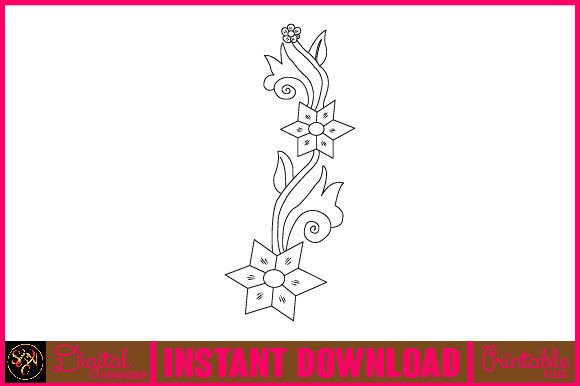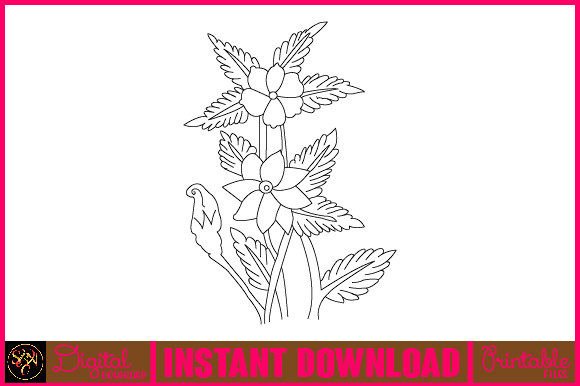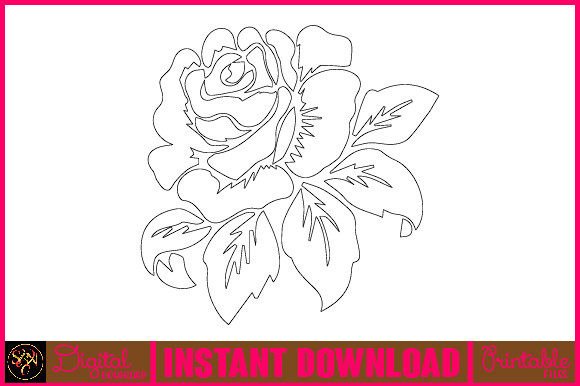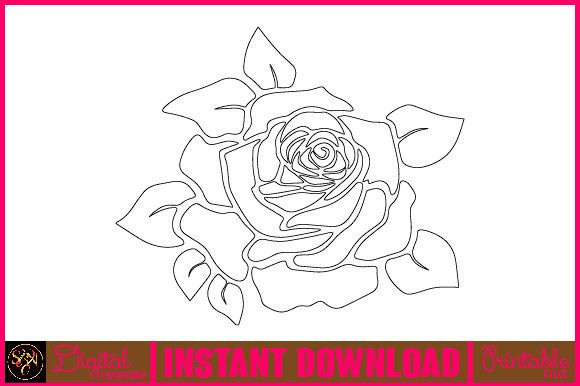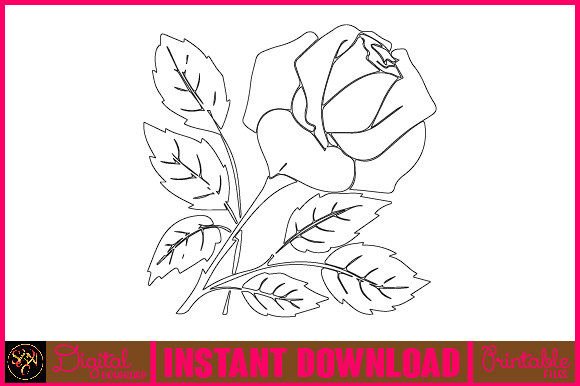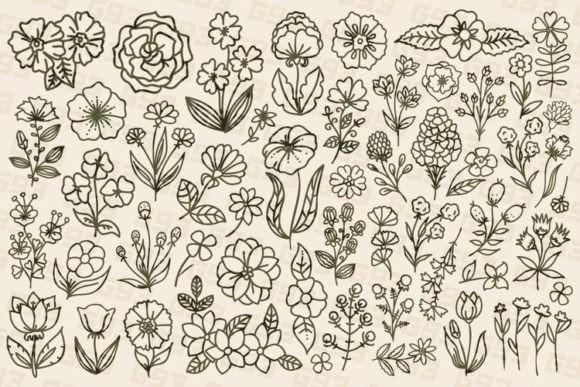
Line Art Drawn Floral Set
A Designer’s First Glance: Delicate, Intentional, and Quietly Confident
Opening Line Art Drawn Floral Set feels like flipping through a sketchbook left open on a sunlit studio table—loose but precise, playful yet controlled. These aren’t rigid clipart florals; they’re hand-drawn vector flowers with fine, consistent line weight, arranged as an outline decorative floral bundle. The mood is soft, botanical, and unhurried—think linen tea towels for a slow-living boutique, not bold festival merch. As an embroidery designer who’s stitched hundreds of floral motifs, I immediately notice what’s *not* there: no heavy fills, no dense satin borders, no forced symmetry. That absence is the design’s greatest strength—and its biggest responsibility.
Where It Lives Best: Real Projects, Not Just Pixels
Last week, I prepped a custom embroidered tote bag for a local herbalist—a lightweight cotton canvas, natural undyed base, meant to hold dried lavender bundles and ceramic apothecary jars. I tested Line Art Drawn Floral Set as a single stem along the bottom hem. It worked beautifully: clean running stitch lines held shape without stiffness, the thin line translated into graceful movement across the fabric’s slight texture, and the doodle-style charm felt intentional—not lazy or underdeveloped. That same set would elevate a baby onesie (delicate, non-bulky), a minimalist apron for a baker, or a small embroidered patch sewn onto a denim jacket cuff. It’s ideal for personalized gift contexts where subtlety reads as care, not compromise.
What Holds Up Under Thread—and What Needs Extra Attention
Line Art Drawn Floral Set thrives in low-density, linear embroidery applications. Running stitch and simple backstitch interpretations translate cleanly. But it’s not built for fill-heavy treatments—avoid turning these outlines into dense satin-stitched blossoms unless you manually rebuild the paths. On stretchy fabrics like jersey or thin knits? Proceed with caution: test stitch density and stabilizer pairing first. A medium-weight cutaway works better than tear-away here—the fine lines need support, not pull. On dark fabric, contrast becomes critical: light thread (ecru, pale grey, soft peach) reads with quiet elegance; white can feel stark unless balanced with other elements. Curved surfaces—like caps or curved pillow edges—require careful placement: avoid tight corners where the line might distort or break visually.
Small Hoop, Big Impact—But Know Your Limits
If you’re stitching on a 3"–4" hoop for baby embroidery or delicate patches, Line Art Drawn Floral Set shines. Its open composition avoids crowding, and individual blooms scale down gracefully. But zoom in too far—say, trying to fit five tiny stems into a 2" circle—and detail blurs. Tiny loops or intersecting stems may collapse into a single unrecognizable line during digitizing. Always inspect the vector paths before converting to an embroidery file: look for anchor points that are too close, overlapping strokes, or unintentional gaps. These won’t fix themselves in stitch.
For Etsy Sellers & Small Shop Owners: Trust Is in the Details
Your customers don’t see vectors—they see the finished product. When a customer orders a personalized gift with Line Art Drawn Floral Set, they’re buying atmosphere: calm, craftsmanship, intention. That means your execution must match that promise. If the line wobbles due to poor stabilizer choice, or if thread tension flattens the delicate rhythm, the perceived value drops—not just in price, but in trust. I’ve seen handmade products lose repeat buyers over inconsistencies like this. Use Line Art Drawn Floral Set consistently across your shop—on packaging labels, digital mockups, even social media previews—to reinforce brand voice. It pairs naturally with serif typography and muted palettes, reinforcing cohesion without shouting.
Practical Notes from the Hoop
- Always test first—on scrap fabric matching your final project’s weight, weave, and stretch.
- Check thread color contrast on both light and dark backgrounds before digitizing.
- Review stitch density: aim for 0.8–1.2 mm stitch length in running stitch areas—tighter risks puckering; looser loses definition.
- Confirm hoop size compatibility before committing to a layout—especially for multi-flower arrangements.
- Inspect small details at actual stitch size: zoom in on your embroidery software preview, then check a physical test sample.
- Test black-and-white mockups—many customers browse in grayscale thumbnails; does the line retain legibility?
- Use proper stabilizer: medium-weight cutaway for stable woven fabrics; hybrid cutaway-tearaway for lighter linens or blends.
- Verify licensing before selling finished items or bundling Line Art Drawn Floral Set into digital embroidery kits—this is an Illustrations asset, not automatically cleared for commercial redistribution.
Not Just Another Floral Bundle—A Design Choice With Weight
Line Art Drawn Floral Set isn’t filler. It’s a deliberate aesthetic decision—one that signals restraint, attention to line quality, and respect for negative space. In a market flooded with over-digitized, high-fill floral designs, this set stands out by doing less. But “less” only works when executed with precision. Used thoughtfully—as part of a custom apparel collection, a curated craft business line, or a heartfelt personalized gift—it adds quiet distinction. Misused? It fades into background noise. So treat it like the considered design asset it is: test, refine, pair intentionally, and let its hand-drawn honesty speak for itself.